MICROBIOMES4SOY Coordinator Angela Sessitsch Among Top 3 at Austria 25 Awards

We are proud to share that Dr Angela Sessitsch, Head of the Center for Health & Bioresources at the AIT Austrian Institute of Technology and Project Coordinator of MICROBIOMES4SOY, has been honoured as one of the Top 3 “Austrians of the Year” in the research category at the prestigious Austria 25 Awards.
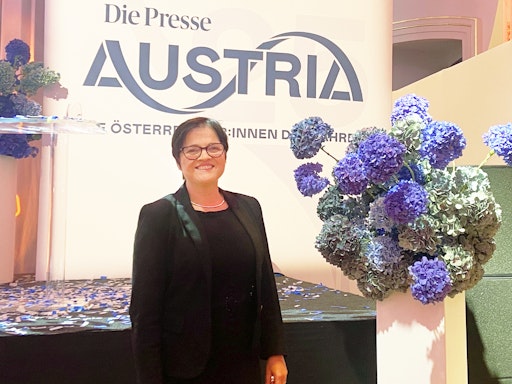
This award, presented by the daily newspaper Die Presse, recognises her outstanding contributions to microbiome research and its impact on sustainable, climate-resilient agriculture. Dr Sessitsch’s pioneering work demonstrates how microbially supported solutions—from seed treatment and crop protection to improved nutrient cycles—strengthen yield security, soil health, and resource efficiency in agriculture.

The press release highlights her leadership in MICROBIOMES4SOY, as a project which explores innovative pathways for sustainable soya bean production, focusing on seed quality, soil health, and nutrient cycles across the food chain.

This achievement underscores the global relevance of microbiome-based solutions and the vital role of MICROBIOMES4SOY in shaping the future of sustainable agriculture and aquaculture.

Read more in the press release (available in German): AIT-Forscherin Angela Sessitsch unter den Top 3 bei den Austria 25 Awards

SHARE:

Understanding Soya Plant Microbiomes: Enhancing Crop Productivity

MICROBIOMES4SOY aims to explore the dynamics and potential of plant microbiomes, specifically focusing on the soya bean model. The project seeks to understand how plant microbiomes impact soya crop productivity. Additionally, it aims to develop microbiome-informed approaches, including agricultural strategies and prediction models, to improve yield stability, promote environmental sustainability, and ensure food safety and quality during production.

Soya-Based Aquafeeds: Innovating Aquaculture Sustainability

In the realm of aquaculture, MICROBIOMES4SOY seeks to pioneer solutions by creating innovative soya-based aquafeeds. The project aims to evaluate the effects of these novel feeds on the fish gut microbiome and overall health, addressing both environmental and nutritional aspects of aquaculture.

Joint Efforts for Food Systems Transformation

MICROBIOMES4SOY aims to work collaboratively with food system stakeholders to define regional transition pathways towards plant-based protein diets, contributing to broader shifts in dietary practices.

Improved Microbiome-Based Knowledge and Skills for Food System Actors

Knowledge and skill empowerment is a key objective, intending to equip food system actors with expertise on microbiome interactions, benefits, and industrial applications. This will be achieved through a multi-actor approach, that shares understanding of microbiomes within the broader context of food systems.

Microbiome-Informed Dietary Recommendations:
Exploring Human Health Impacts

Moreover, human health is a central theme, with a dedicated objective to investigate the impact of soya-derived protein diets on the human gut microbiome. The project aims to provide microbiome-informed dietary recommendations, contributing valuable insights to the intersection of nutrition and microbiology.